
My Sales Call Script
Everything you need to start having awesome sales calls
👋 Hey there, I’m Rob. Each week I write a newsletter and record a companion podcast (Spotify, YouTube). Also:
My book is coming out July 7. Pre-order it HERE.
My next “physics of sales” bootcamp starts May 4, for founders to quickly learn sales and get feedback. It is half full! Learn more and reach out HERE.
I also have availability to do some hands-on advising with a few startups (and/or quickly fix your sales calls). Learn more and grab time with me to discuss HERE.
This week, I’ve created a very special resource for you: A full script for your sales calls. Access it for free HERE.
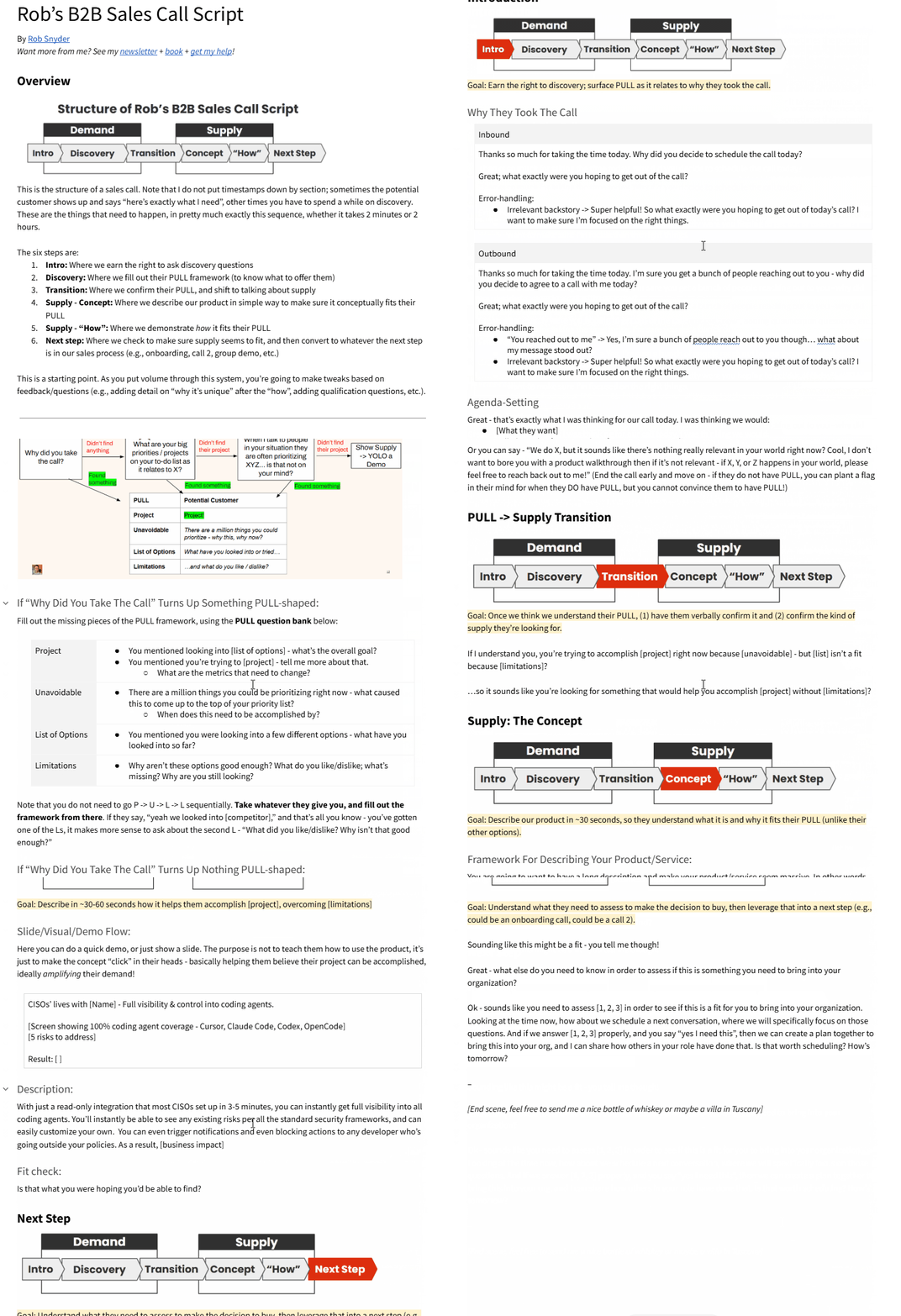
Here’s why this is needed… and why it might seem similar to your current call script, but is actually deeply different:
Many of us think about sales backwards, which causes us to think about startups backwards, which makes finding product-market fit virtually impossible.
When we try to sell something, or think about selling something, we operate with a theory about why people buy things. In other words: What causes a purchase?
This theory isn’t something you’ve necessarily thought about or stated out loud. But if you watch your sales calls, or just observe how you feel about sales, there’s a theory there. It is usually something like:
“I believe that if you like me, you will buy our product.”
“I believe that if I find a big pain point, you will buy our product.”
“I believe that if I show you how awesome and valuable our product is, you will buy it.”
“I believe that if I show you enough screens in our product, something will fire in your brain and you’ll want it.”
“I believe that if I put a compelling logical argument in front of you, you’ll buy my product.”
The same is true if you look through the existing sales methodologies on offer, and ask yourself, “What does this methodology assume causes purchases?”
Basically all these theories point in one direction - that we (and/or our product) cause buyers to buy things. We convince buyers to buy, and we do this through a variety of methods and means, including positioning statements, value propositions, discovery questions, and demos. This is what I call “push” theory.
“Push” theory gets sales entirely backwards. It is like saying “wet streets cause rain”. We do not cause buyers to buy things. If we did, you’d hear them say things like, “You know what? Let me drop my priorities to buy your product.”
Instead, “pull” theory embraces that buyers cause purchases. Specifically, buyers buy things when they are trying to accomplish something right now - but their existing methods and options are not good enough. (See: The PULL Framework.) When this is the case, they buy something that unblocks them.
The difference between “push” theory and “pull” theory can be seen in how you structure a sales call and approach each piece of it:
What are you looking for in discovery?
How do you describe your product?
What do you demo? What is the purpose of a demo?
But it’s more than that. If you think sales is about pushing, you’re going to avoid and delay sales until your “product is ready”. And you’re going to suck at outbound and sales because you’re going to be thinking about it backwards, not because you’re “bad at sales”.
So now, you have a sales script you can implement today that helps you find pull, stop pushing, and start scaling fast!
Again, access HERE. Enjoy - and if you find it useful, share it with a friend or in a startup group.